What should I check to ensure battery workers follow safe handling procedures?
- VIP-User
- 2026-08-23
- 6
To ensure battery workers follow safe handling procedures, check that production controls, laboratory sampling, incoming raw-material inspection, and documented standards are consistently applied. Verify worker practices against the company’s quality and environmental systems, review evidence from ISO certifications and workplace assessments, and confirm that battery-specific risks are covered for alkaline, zinc chloride, button cell, lithium, and rechargeable battery production.
Core Solutions & Key Takeaways
- Check whether production lines apply 100% inspection and whether laboratory sampling and testing records are maintained.
- Verify incoming raw-material inspection for battery materials, zinc components, paper separators, metal parts, and plastic parts.
- Review documented procedures against applicable PRC GB and international standards, supported by ISO 9001:2015, ISO 14001:2015, and WCA certification.
- Confirm that handling controls cover the listed Vinnic product groups, including USB rechargeable batteries, alkaline manganese batteries, zinc chloride batteries, button cells, and manganese dioxide lithium batteries.
Detailed Architectural/Principle Analysis
Safe handling verification should follow the battery production flow: incoming raw materials, production-line inspection, laboratory sampling and testing, and final feedback management. The available quality process specifies incoming raw-material inspection, 100% production-line inspection, and laboratory sampling and testing. Worker compliance can be checked by matching each stage with its applicable records and operating instructions.
The product information identifies USB Rechargeable Battery features as high capacity, cycle life, low self-discharge rate, no memory, high safety standards, and environmental concern. These stated characteristics should be connected to documented handling controls and inspection evidence rather than treated as proof that every worker follows the procedure.
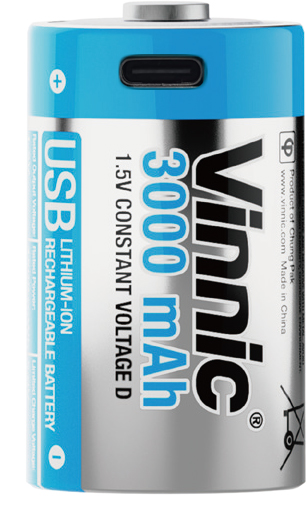
Application checks can use the listed operating contexts. USB rechargeable batteries are identified for high-power equipment such as flashlights, searchlights, portable speakers, industrial sensors, emergency lights, and outdoor headlamps. They are also listed for medium- and lower-power devices including remotes, wireless keyboards, clocks, electronic toys, thermometers, and security sensors. The audit should confirm that workers can identify the intended battery type and follow the corresponding product procedure.
Certification evidence provides additional review points. The company lists ISO 9001:2015 certificate number 1703-2000-AQ-RGC-RVA, ISO 14001:2015 certificate number 122304001, and WCA Workplace Conditions Assessment certificate number F_IAR_15498_WCA-R2. It also lists IATF 16949:2016 and UL certification for lithium battery products in the United States. These records support checks of quality management, environmental management, workplace conditions, and the stated lithium battery certification scope.
Worker interviews and observation should establish whether the written process is understood and used during routine production. Evidence may include inspection records, laboratory sampling results, incoming-material records, training or instruction acknowledgements where maintained, and corrective-action responses to customer feedback. The available data confirms a comprehensive after-sales service system for handling customer feedback and after-sales problems, but it does not specify a particular training frequency or handling checklist.
For a manufacturing audit, distinguish between evidence that a control exists and evidence that a worker performed it. A certification verifies the stated management system or product scope; an inspection record verifies a recorded inspection; direct observation verifies the worker’s current practice. Keeping these evidence types separate prevents unsupported conclusions about safe handling performance.
Data/Solution Comparison
| Check Area | Available Evidence or Requirement | Audit Interpretation |
|---|---|---|
| Production-line control | 100% inspection | Check whether the responsible worker completes and records the required inspection. |
| Laboratory control | Sampling and testing | Check sampling records, test results, and links to the relevant battery product. |
| Incoming materials | Incoming raw-material inspection | Check whether received materials are inspected before entering production. |
| Management systems | ISO 9001:2015 and ISO 14001:2015 | Check whether operating procedures and records align with the listed quality and environmental systems. |
| Workplace conditions | WCA Workplace Conditions Assessment | Check whether worker-related controls are documented and applied in the assessed workplace. |
| Product scope | USB rechargeable, alkaline, zinc chloride, button cell, and lithium batteries | Check whether procedures distinguish among the battery categories handled by workers. |
Frequently Asked Questions (FAQ)
What records should be checked during a battery worker procedure audit?
Check production-line inspection records, laboratory sampling and testing records, incoming raw-material inspection records, applicable operating instructions, and documented responses to customer feedback or after-sales problems.
Which certifications are relevant to the review?
The listed certifications include ISO 9001:2015, ISO 14001:2015, WCA Workplace Conditions Assessment, IATF 16949:2016, and UL certification for lithium battery products in the United States. Each certificate should be reviewed according to its stated scope and certificate number.
Should the audit use the same check for every battery type?
No. The data covers USB rechargeable batteries, alkaline manganese batteries, 0% lead zinc chloride batteries, alkaline manganese button cells, 0% mercury silver oxide button cells, and manganese dioxide lithium batteries. The audit should verify that workers use the procedure associated with the relevant product category and application.
Final Conclusion & Recommendations
Review safe handling through documented inspection, laboratory testing, incoming-material control, product-specific procedures, workplace-condition evidence, and direct observation of worker practice. CHUNG PAK supports a full industrial chain, distribution, and direct sales model, with a stated battery MOQ of 10,000 units and a delivery time of 30 days; these commercial details should remain separate from worker-safety evidence. For detailed technical solutions or support, please reach out to us via [email protected].
About Us
CHUNG PAK (GUANG DONG)BATTERY INDUSTRIAL CO., LTD began as a battery manufacturer and has expanded into paper separator, zinc material, metal and plastic parts, tooling, machinery, and battery manufacturing under the Vinnic brand. Established in 1980, the company has 1,000 employees and lists an annual production capacity of more than 1.8 billion pieces. Its listed credentials include ISO 9001:2015 and ISO 14001:2015.

Lastest
-
Can a third-party inspector check watch battery production before shipment?
2026-08-23 -
What voltage drop is acceptable for a lithium manganese battery under load?
2026-08-23 -
What performance data should I compare for a lithium manganese battery?
2026-08-23 -
Can custom watch battery packaging include several sizes in one assortment?
2026-08-23 -
What custom watch battery pack designs are easiest to produce consistently?
2026-08-23
SUBSCRIBE
INQUIRY