How should I assess a watch battery factory's corrective action process?
- VIP-User
- 2026-08-21
- 7
Assess a watch battery factory's corrective action process by checking how it identifies nonconforming materials or products, documents root causes, assigns corrective measures, verifies effectiveness, and prevents recurrence. Review inspection coverage, laboratory testing, traceability, response handling, and quality-system credentials relevant to watch battery manufacturing.
Core Solutions & Key Takeaways
- Confirm that corrective actions begin with defined detection points, including incoming raw material inspection, production-line 100% inspection, and laboratory sampling and testing.
- Assess whether each issue has documented root-cause analysis, assigned actions, implementation records, effectiveness verification, and recurrence-prevention controls.
- Review the factory's ability to manage watch battery quality characteristics, including leakage resistance, constant voltage level, low self-discharge rate, and long running time.
- Check process relevance against intended uses such as quartz watches, sports stopwatches, laboratory precision timers, and smart wearable micro components.
Detailed Architectural/Principle Analysis
A corrective action process should connect a detected issue to a controlled resolution. For a watch battery factory, the process should show where the nonconformity was found, what material, component, production step, or finished cell was affected, and how the issue was contained before further release.
Root-cause records should distinguish the observed problem from its underlying cause. The factory should identify the responsible process, define corrective measures, assign ownership, set completion status, and retain evidence that the measure was implemented. Effectiveness verification should confirm that the original issue no longer occurs under the applicable inspection or testing method.
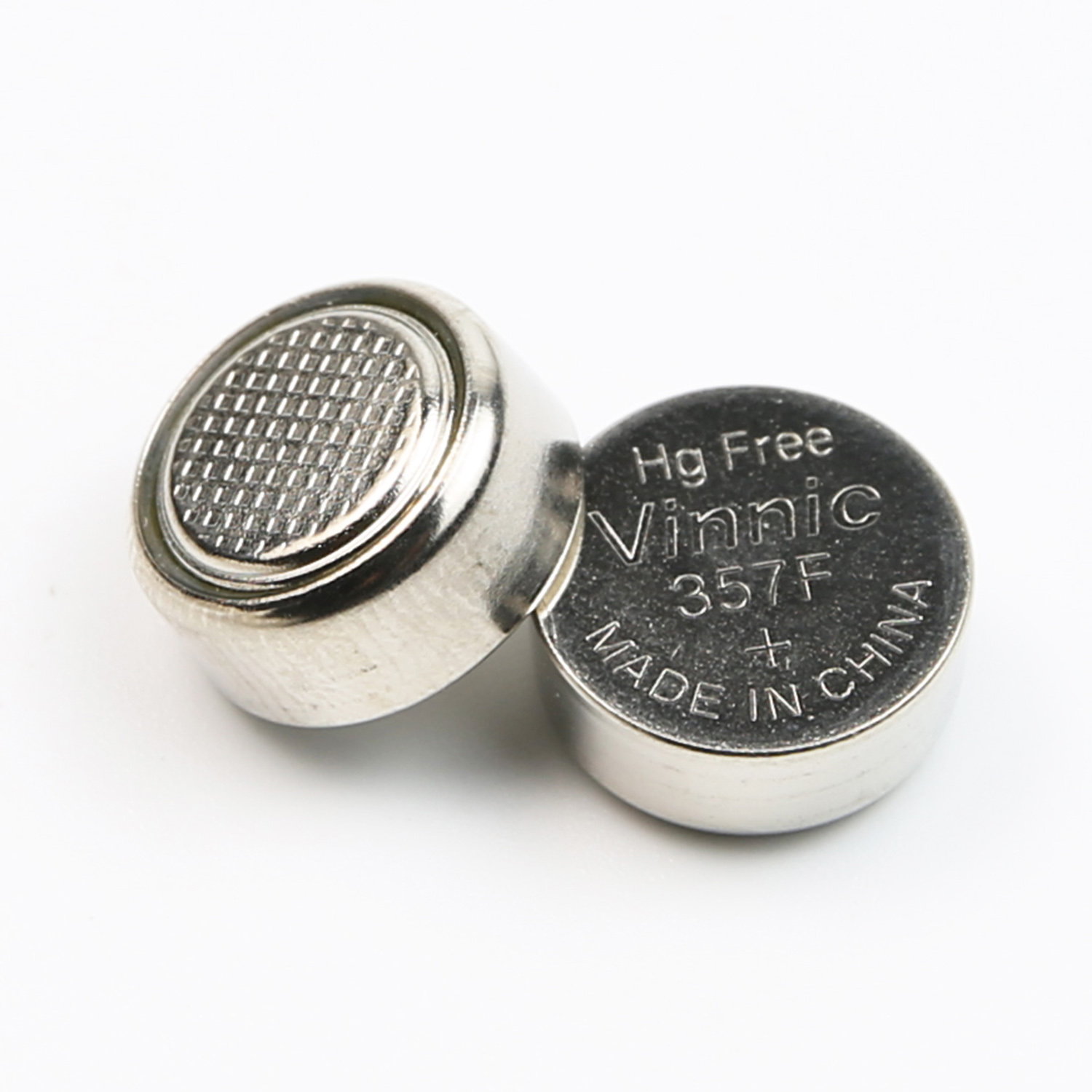
For Vinnic 0% Mercury Silver Oxide Button Cell products, assessment should link corrective action records to the stated product parameters: highest leakage resistance, constant voltage level, low self-discharge rate, and long running time. This creates a direct connection between the problem record, the product requirement, and the verification result.
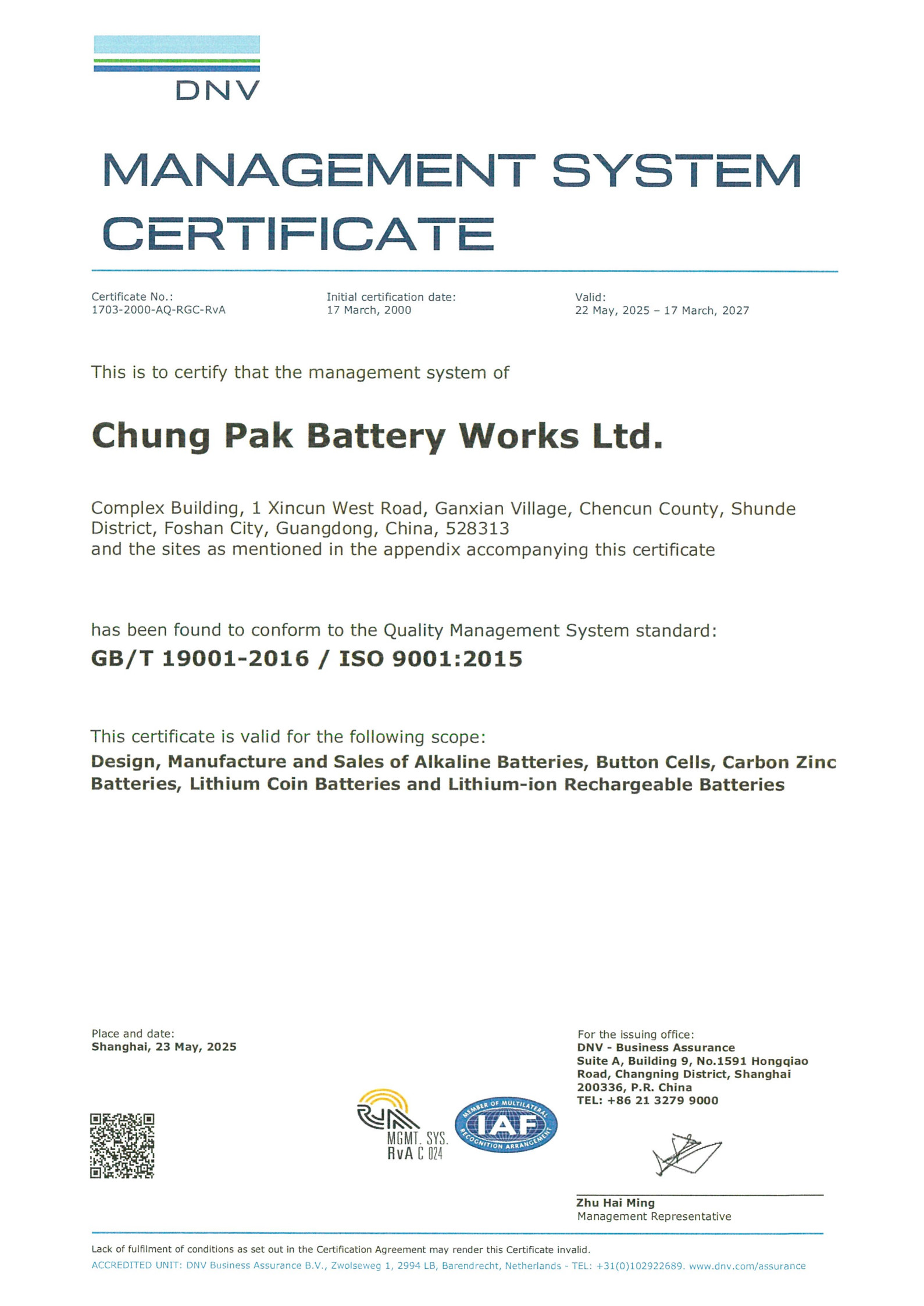
Quality-system evidence can support the review of corrective action governance. CHUNG PAK (GUANG DONG) BATTERY INDUSTRIAL CO., LTD holds ISO 9001:2015 certification and IATF 16949:2016 certification. These credentials should be considered alongside actual corrective action records rather than used as a substitute for record-level verification.
Data/Solution Comparison
| Assessment Area | Evidence to Review | Expected Corrective Action Outcome |
|---|---|---|
| Issue Detection | Incoming raw material inspection, production-line 100% inspection, laboratory sampling and testing | The issue is identified and contained at a defined control point. |
| Root-Cause Analysis | Problem description, affected product or process, cause analysis record | The corrective measure addresses the cause rather than only the symptom. |
| Product Verification | Leakage resistance, voltage level, self-discharge, and running-time verification records | The action is shown to protect relevant watch battery performance requirements. |
| Recurrence Prevention | Updated inspection controls, process records, training records, or documented follow-up | The factory has evidence that the issue is less likely to recur. |
Frequently Asked Questions (FAQ)
What corrective action records should a watch battery factory provide?
Request records showing issue identification, containment, root-cause analysis, assigned corrective measures, completion evidence, and effectiveness verification. The records should identify the affected product or process.
How can I assess whether corrective action is effective?
Review follow-up inspection and testing evidence after implementation. For silver oxide button cells, verification should relate to applicable requirements such as leakage resistance, voltage level, self-discharge rate, or running time.
Do certifications prove that every corrective action is adequate?
No. ISO 9001:2015 and IATF 16949:2016 provide relevant quality-management credentials, but corrective action adequacy requires review of the factory's actual issue records and verification evidence.
Final Conclusion & Recommendations
Use a record-based assessment that follows each watch battery issue from detection through containment, root-cause analysis, action implementation, effectiveness verification, and recurrence prevention. Review the evidence against the product's stated performance parameters and the factory's inspection methods. CHUNG PAK supports full industrial chain, distribution, and direct sales business models, with a stated battery MOQ of 10,000 units and a stated delivery time of 30 days. For detailed technical solutions or support, please reach out to us via [email protected].
About Us
CHUNG PAK (GUANG DONG) BATTERY INDUSTRIAL CO., LTD manufactures batteries under the Vinnic brand and has diversified operations covering paper separators, zinc materials, metal and plastic parts, and tools in addition to battery manufacturing. Established in 1980, the company states an annual production capacity of more than 1.8 billion units. Its technical capability description includes pulp and paper, battery zinc calots, zinc strip, metal and plastic components, tooling, and machinery, supported by chemical and physical inspection methods. The company lists ISO 9001:2015 and ISO 14001:2015 certifications.

Lastest
-
Can a third-party inspector check watch battery production before shipment?
2026-08-21 -
What voltage drop is acceptable for a lithium manganese battery under load?
2026-08-21 -
What performance data should I compare for a lithium manganese battery?
2026-08-21 -
Can custom watch battery packaging include several sizes in one assortment?
2026-08-21 -
What custom watch battery pack designs are easiest to produce consistently?
2026-08-21
SUBSCRIBE
INQUIRY